
IT IS YOUR MONEY
RWA Tokenization: Unlocking Trillions in Dormant Value
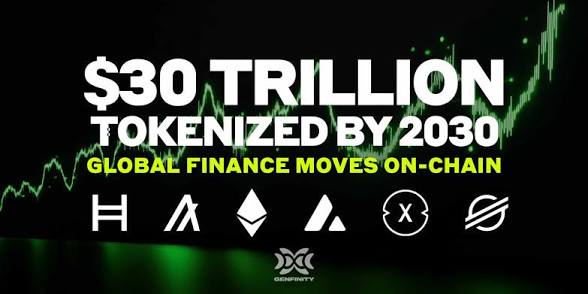
Trillions in real-world assets remain locked due to inefficiencies in ownership transfer and access. RWA tokenization leverages blockchain to digitize these assets—unlocking liquidity, transparency, and global reach. From bonds to commodities, this transformation is redefining finance by making previously static assets dynamic, measurable, and tradeable in real time across borders.
The Hidden Potential of Illiquid Assets
An estimated $300 trillion in real-world assets—real estate, infrastructure, fine art, and more—are largely illiquid and inaccessible to most investors. Traditional ownership models require intermediaries, lengthy settlements, and high minimum investments. Tokenization disrupts this model by breaking down large assets into smaller, blockchain-tracked units that anyone can buy, sell, or trade.
BlackRock’s entry into tokenized funds highlights growing institutional interest. In 2023, the firm launched a private blockchain-based money market fund, enabling same-day settlement and near-continuous auditing—demonstrating how even conservative giants see value in RWA digitization.
From Theory to Institutional Adoption
Major banks are piloting RWA projects. JPMorgan’s Onyx network has facilitated tokenized bond issuances, while HSBC executed a $100 million green bond on a private blockchain. These experiments prove that core financial instruments can operate more efficiently when represented digitally.
One notable case: Credit Suisse issued a tokenized covered bond in 2022, settling instantly and reducing counterparty risk. Such innovations suggest future capital markets may run on hybrid models—part traditional, part decentralized—with tokenized RWAs at their core.
Technical and Regulatory Foundations
Successful tokenization requires robust legal frameworks, custodial solutions, and identity verification. Standards like ERC-3643 (for regulated assets) ensure tokens comply with jurisdictional rules. Oracles bridge off-chain data (e.g., property valuations) to on-chain logic, maintaining accuracy.
Regulators are responding. The UK’s Financial Conduct Authority and Singapore’s MAS have launched sandboxes for RWA pilots, encouraging innovation while managing risk. Clearer rules mean faster scaling.
The Economic Ripple Effect
Beyond efficiency, tokenization promotes financial inclusion. Farmers in emerging markets can tokenize land deeds; SMEs can securitize receivables. This democratization aligns with ESG goals, enabling micro-investments in renewable energy or affordable housing.
With proper governance, RWA tokenization doesn’t just modernize finance—it reshapes it. The assets themselves don’t change, but how we interact with them does. That shift holds transformative power.
To learn how your organization can harness dormant asset value, visit DigitalAssets.Foundation for expert insights and a complimentary strategy session
More News
© 2026